



Why Your Speedometer and GPS Never Agree?

Prefer listening? Press play below to hear the AI-generated podcast version of this article.
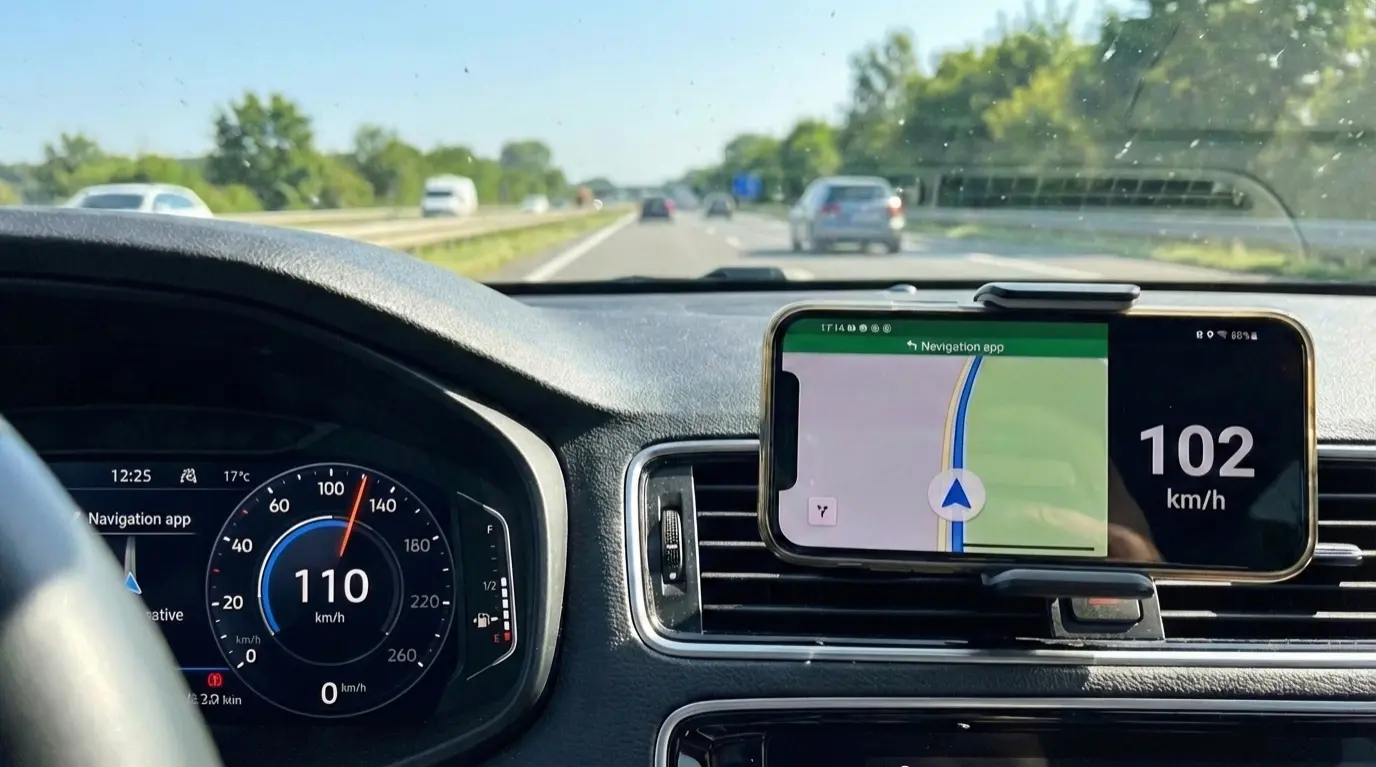
For many drivers and fleet managers, it is a common observation: the speed shown on the vehicle’s dashboard is almost always higher than the speed displayed by a GPS tracking device or a mobile app. On a long stretch of highway, your speedometer might read 100 km/h, while your GPS insists you are only doing 94 km/h.
This discrepancy is not a malfunction. It is the result of how different technologies calculate movement and the strict safety regulations governing the automotive industry.
1. The Mechanical Side: Why Speedometers "Over-Read"
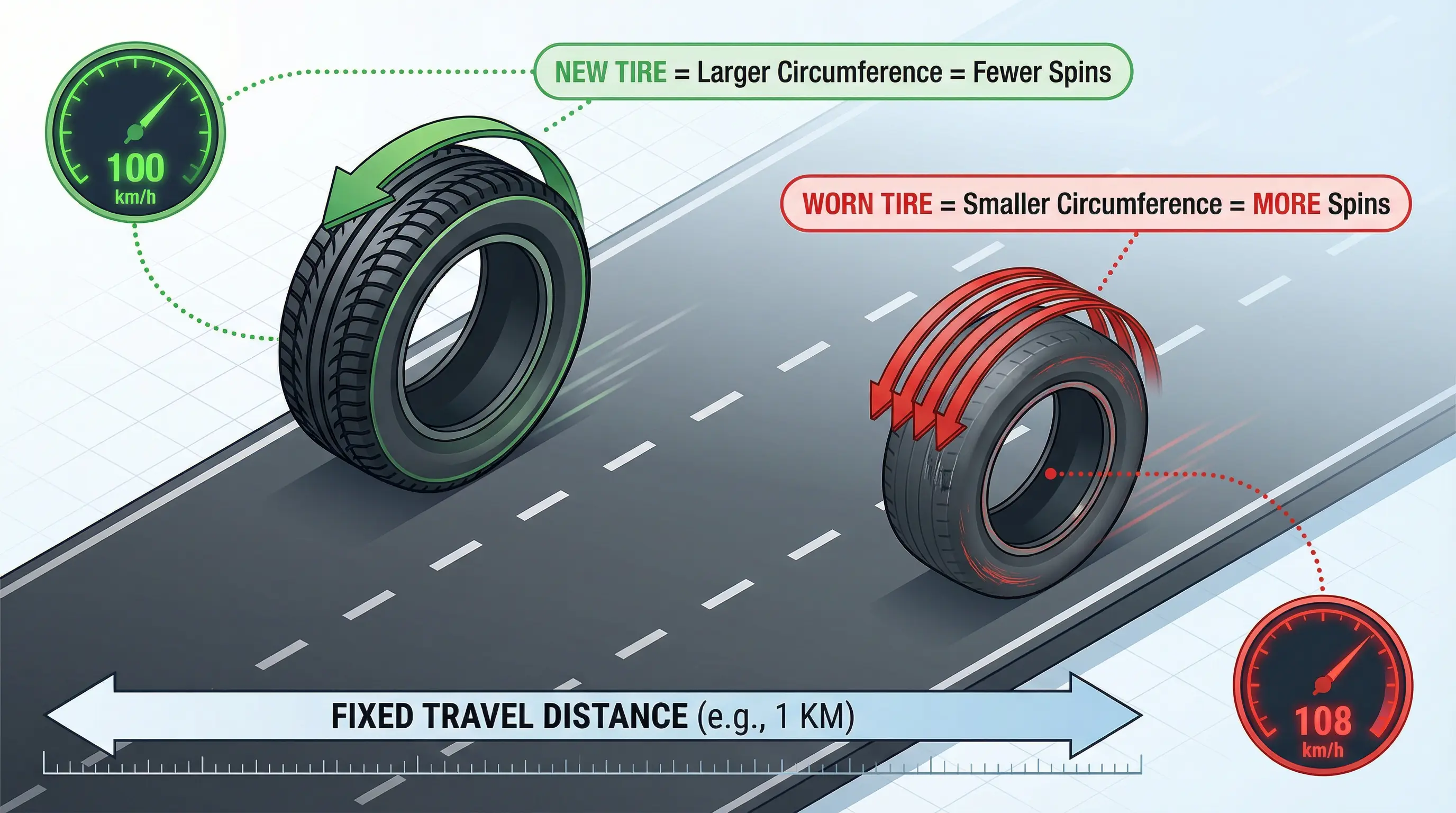
Your vehicle’s speedometer doesn't actually measure how fast you are moving across the ground. Instead, it measures the rotation of the transmission or wheels and converts those "spins" into a speed reading based on a fixed mathematical formula.
The Tire Variable
This formula assumes your tires are exactly the size they were when they left the factory. However, physics changes this over time:
- Tire Wear: As tread wears down, the tire’s diameter decreases. A smaller tire must spin more times to cover the same distance, which tricks the speedometer into showing a higher speed.
Tire Pressure: Under-inflated tires have a smaller "rolling radius," leading to a higher speed reading on the dash.
2. The Legal Standard: UN ECE Regulation 39
In Azerbaijan, across Europe, and within the CIS region, vehicle manufacturers must follow strict accuracy laws. The most prominent is UN ECE Regulation No. 39, which has been harmonized into local standards (such as GOST R 41.39 in many CIS countries).
These laws state a very simple rule: A speedometer must never show a speed lower than the actual speed. To ensure they never accidentally break this law due to tire wear or production tolerances, manufacturers calibrate speedometers to be "optimistic." Under the UN ECE formula, a car traveling at a true speed of 100 km/h is legally allowed to show a dashboard speed of up to 114 km/h (10% + 4 km/h), but it can never show 99 km/h.
- Reference: UN ECE Regulation No. 39 - Speedometer Equipment
- CIS Context: GOST R 41.39-99 (Russian/CIS Harmonized Standard)
3. The Digital Side: Why GPS is the "True" Speed
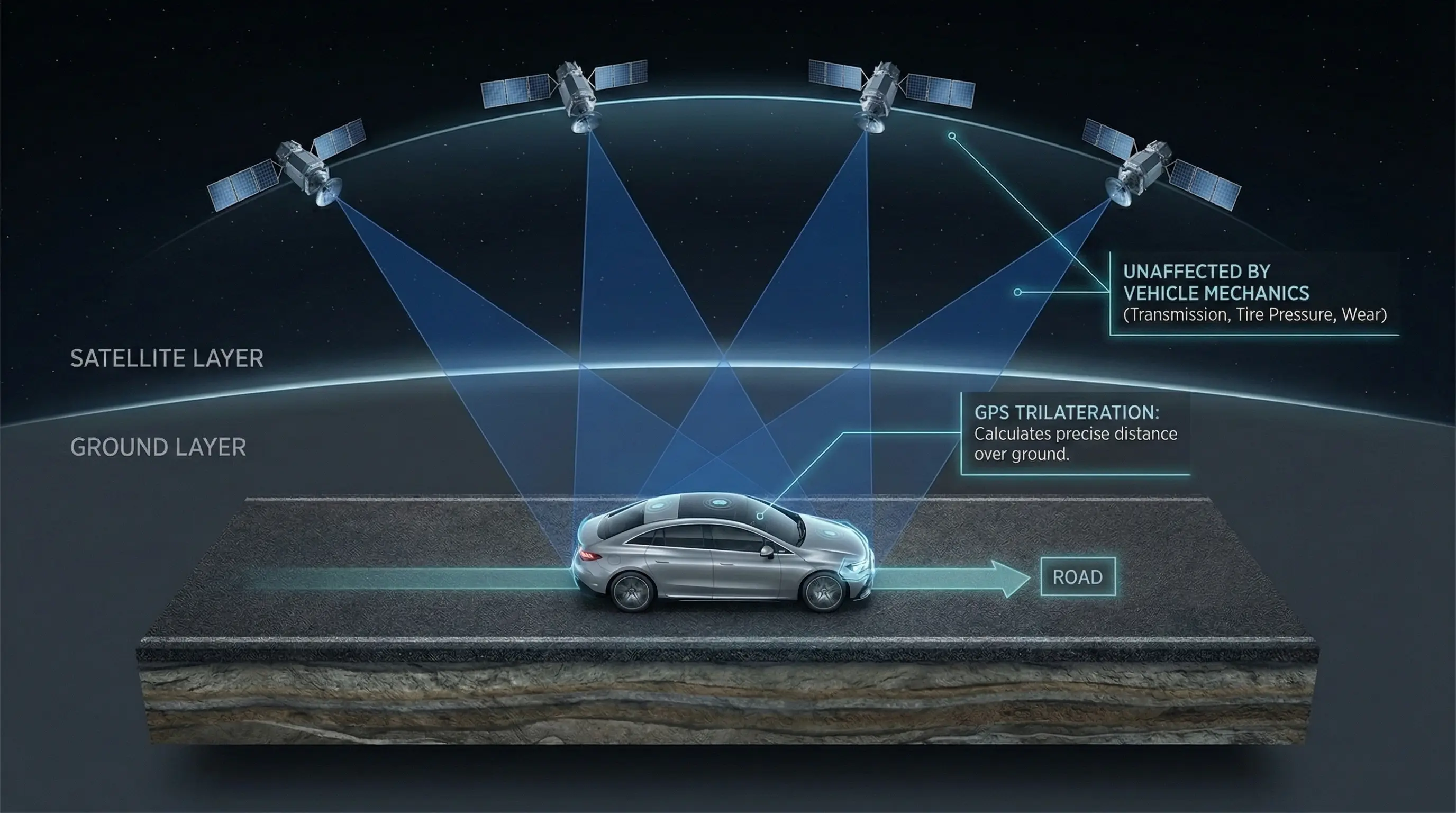
Unlike the mechanical speedometer, GPS (Global Positioning System) determines speed by measuring the time it takes to travel between two precise geographic coordinates.
Because it uses atomic clocks and satellite trilateration, a high-quality GPS receiver is generally accurate to within 0.2 km/h when driving at a constant speed with a clear view of the sky. It is not affected by tire pressure, gear ratios, or mechanical wear.
4. Why This Matters for Fleet Monitoring
For professional fleet operators, relying on dashboard readings can lead to inconsistent data. If you are monitoring fuel efficiency, driver behavior, or delivery times, the GPS data provided by professional telematics systems is the objective "gold standard." It ensures that your data remains accurate regardless of which vehicle is being driven or the condition of its tires.
Summary: Which one should you trust?
- For Legal Safety: Trust your speedometer. If you stay at the speed limit on your dash, you are guaranteed to be within the legal limit.
- For Precise Data & Analysis: Trust your GPS. It provides the most accurate reflection of your actual progress and vehicle performance.
If you want support in this or any other question with your fleet monitoring need, A+A Security friendly support is here to help.
📞 Call us:: (+994 12) 496 00 56 / (+994 50) 224 80 61
- 📧 Email: [email protected]